Why Your Facebook Posts Are Not Getting Engagement
Common caption mistakes and how to fix them quickly.
Why Your Facebook Posts Are Not Getting Engagement (And How to Fix It)
You are posting consistently. You have decent visuals. But the likes, comments, and shares just are not coming. Facebook reach has not died — but the rules have changed completely. Here is what is actually going wrong and how to fix it.
Facebook Is Not Dead — Your Strategy Might Be
Facebook still has over 3 billion monthly active users. It remains the largest social network on the planet. The problem is not the platform — the problem is that most brands and creators are still using a 2017 playbook on a 2025 algorithm.
Facebook's algorithm has gone through fundamental changes over the past few years. It now heavily prioritises content that sparks meaningful interactions — comments, shares, and saves — over passive content that just collects likes. If your posts are not designed to trigger those deeper actions, the algorithm simply stops showing them.
Let us go through the most common reasons Facebook engagement drops — and the exact fixes for each one.
Reason 1: Your Opening Line Is Not Doing Its Job
Facebook shows a preview of your post in the feed — typically the first two lines before a "See More" cutoff. If those two lines do not create curiosity, tell a story, or make a promise, people scroll past.
Weak opening lines that kill reach:
- "Happy Monday everyone! 🌟"
- "We are so excited to announce..."
- "Check out our latest blog post!"
- "Here are some tips for..."
Strong opening lines that earn the click:
- "I made a mistake that cost us 3 months of growth. Here is what I learned."
- "Most people do this completely backwards. (I did too, until last year.)"
- "This one change doubled our Facebook reach in 30 days — no paid promotion."
- "Nobody talks about this, but it is the real reason your posts are not being seen."
Reason 2: You Are Posting Links Too Early
Facebook's algorithm actively suppresses posts that push users off the platform too quickly. If your post leads with a link — or contains a link in the first few lines — expect significantly lower organic reach.
The fix is simple: put your link in the first comment, not the post itself. Write your full post as native text, deliver the value inside Facebook, and then direct readers to the comment for the link. This single change can dramatically improve reach on link-heavy content.
Alternatively, post the content natively and add the link after you have already seen strong initial engagement — Facebook tends to be more forgiving once a post has momentum.
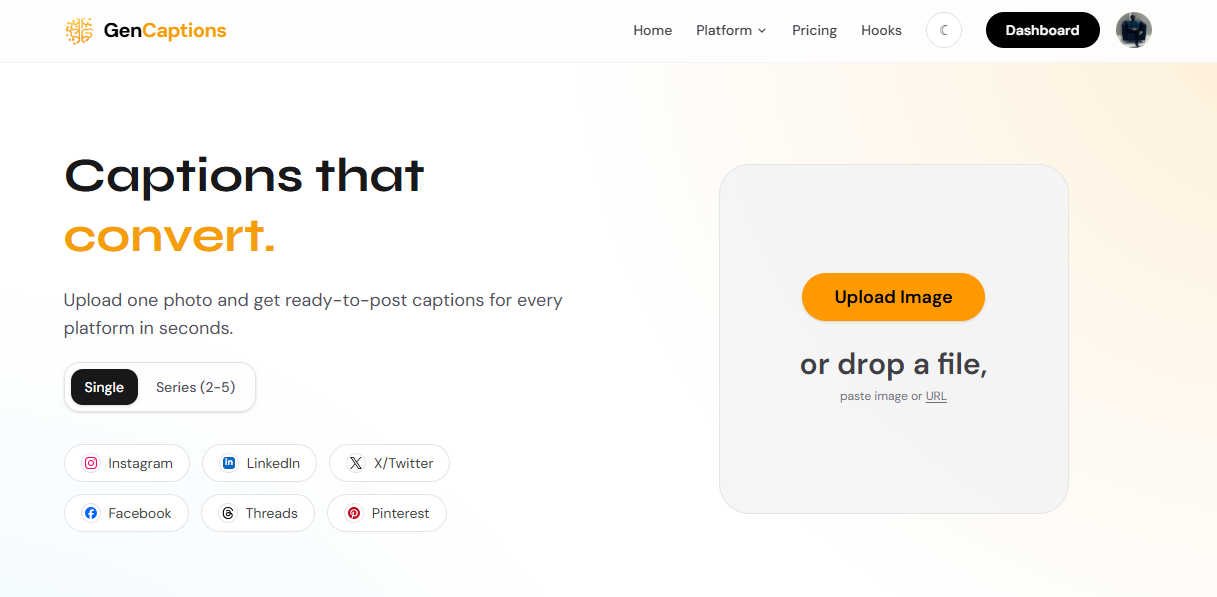
Step 1 — Write a Stronger Caption With GenCaptions
Most Facebook engagement problems start with weak copy. GenCaptions.com helps you write Facebook captions with the right hook, structure, and CTA for your specific post type — so you stop losing reach to bad first impressions.
Reason 3: You Are Not Asking for the Right Engagement
Facebook's algorithm weighs different engagement types differently. A comment is worth significantly more than a like. A share is worth more than a comment. A share with a comment from the person sharing is the most valuable signal of all.
Most posts end with no CTA, a vague "let us know what you think," or a like-bait ask that Facebook actively penalises. Instead, engineer your CTA to trigger the engagement type the algorithm rewards most.
CTAs that drive comments:
- "Which of these do you do? Comment the number below."
- "Tag someone who needs to read this today."
- "Drop a ✅ if you agree or ❌ if you think I am wrong."
- "What would you add? Tell me in the comments — I read every one."
CTAs that drive shares:
- "Share this with someone who is still making this mistake."
- "Save this post — you will need it next time you sit down to write."
- "If this helped you, sharing it takes 2 seconds and means everything."
Reason 4: Your Content Is Too Promotional
Facebook users do not come to the platform to be sold to. They come to connect, be entertained, learn something, or feel something. When every post is a product push or a brand announcement, followers tune out — and the algorithm follows their lead.
A sustainable Facebook content mix looks something like this:
- 40% Educational: Tips, how-tos, insights, explainers — content that teaches something genuinely useful
- 30% Storytelling: Behind-the-scenes, personal moments, brand journey, customer stories
- 20% Engagement: Questions, polls, opinions, debates — content designed to start conversations
- 10% Promotional: Product features, offers, announcements — kept to a minimum
If your current mix is flipped — heavily promotional with occasional educational posts — your reach problem will not be solved by posting more. It will be solved by posting differently.
Reason 5: You Are Not Using Facebook's Preferred Formats
Facebook consistently gives preferential reach to content that uses its native formats. In order of algorithmic preference right now:
- Facebook Reels — short-form video is currently getting the most organic push on the platform
- Native video (uploaded directly) — not YouTube links, not Vimeo embeds — video uploaded to Facebook directly
- Text posts with strong engagement signals — long-form personal stories and opinion posts that generate comments
- Photo posts — still effective, especially carousel formats
- Link posts — lowest organic reach, used sparingly
If your content calendar is mostly link posts and product photos, shifting even 30% of your output to native video or Reels can significantly change your reach numbers within weeks.
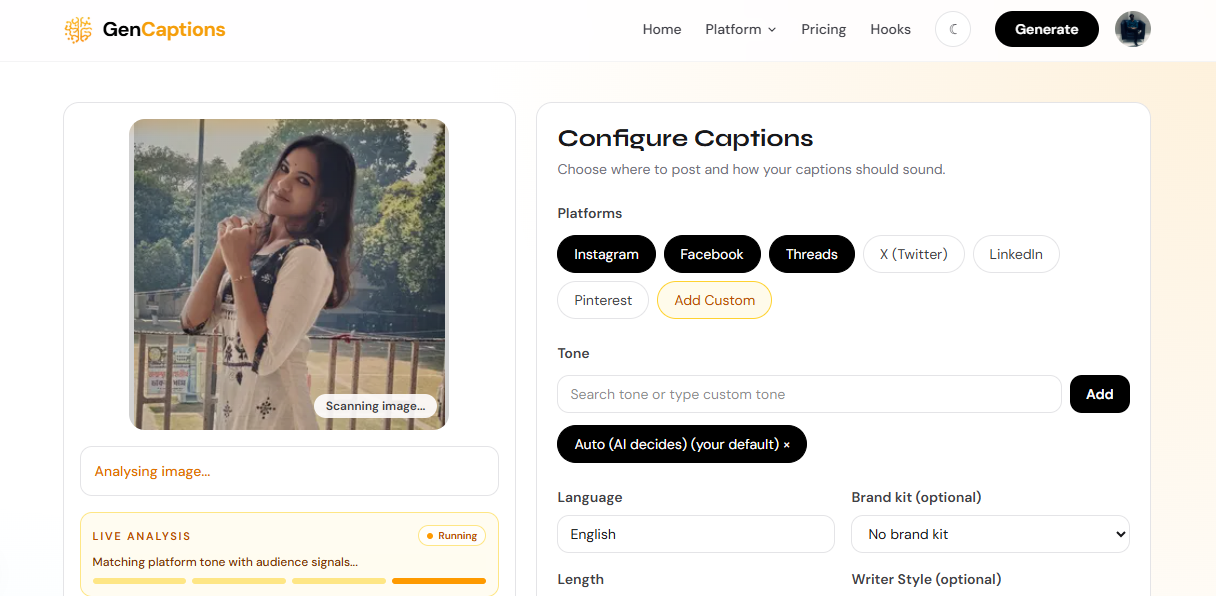
Step 2 — Match Your Caption Style to Your Post Type
GenCaptions lets you select the exact type of post you are writing — educational, storytelling, engagement, or promotional — and generates a caption calibrated for that format. This means your hook, body, and CTA are all built around the engagement behaviour you are trying to trigger.
Reason 6: You Are Posting at the Wrong Times
Facebook's algorithm gives every post a short initial window — typically 30 to 60 minutes — to generate engagement before deciding how widely to distribute it. If you post when your audience is not online, you lose that window entirely and the post essentially dies before it starts.
General best times to post on Facebook (based on global engagement data):
- Tuesday, Wednesday, Thursday consistently outperform Monday and Friday
- 9am–11am and 1pm–3pm local time tend to see the highest engagement
- Evenings (7pm–9pm) work well for consumer and lifestyle brands targeting personal audiences
That said, your own Page Insights are the most reliable source of this data. Check when your specific audience is most active and build your posting schedule around those windows.
Reason 7: You Are Not Responding to Comments Fast Enough
Comment velocity matters. When a post receives comments quickly and the page owner replies to those comments, Facebook interprets it as a highly engaging conversation and expands distribution. Pages that ignore their comments are essentially telling the algorithm their content is not worth amplifying.
Set a reminder to check and reply to every comment within the first hour of posting. Even a short reply counts as a new comment signal. This habit alone can meaningfully extend the reach of every post you publish.
Building a Facebook Strategy That Actually Works
Fixing Facebook engagement is rarely about one thing. It is usually a combination of stronger copy, better content mix, smarter CTAs, and consistent response habits. If you are managing Facebook for a business and need a full content strategy — not just better captions — Whatznot builds social media strategies designed around real business goals, not just vanity metrics.
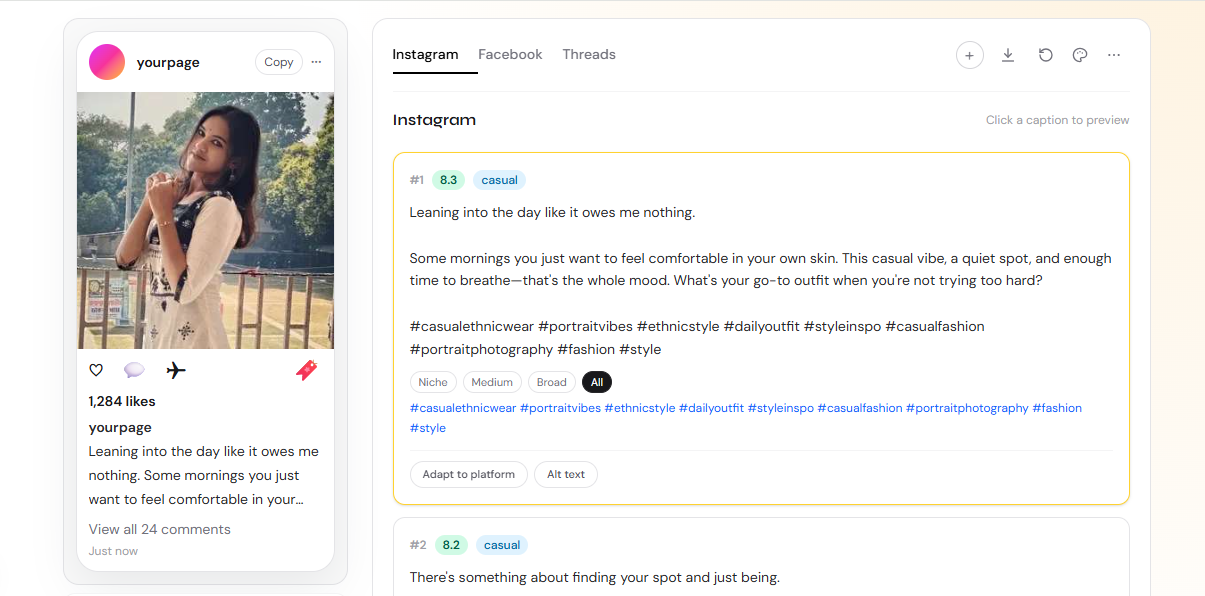
Step 3 — Copy Your Caption and Post With Confidence
Once your caption is ready on GenCaptions.com, copy it in one tap and paste directly into Facebook. The hook is built to earn the click, the body is structured to keep readers engaged, and the CTA is designed to trigger the right kind of interaction. If the first version does not feel right, regenerate for a fresh angle instantly.
Fix One Thing at a Time
Do not try to overhaul everything at once. Start with your opening line — that single fix has the highest impact on reach. Then work on your CTA. Then your content mix. Small, consistent improvements compound fast on Facebook.
And when you need captions that are already built around what works — with the right hook, the right tone, and the right ask — GenCaptions.com takes the guesswork out of every post.
Try it free today and write your next Facebook post in under a minute.
About this article
This guide is part of the GenCaptions editorial library focused on better hooks, stronger positioning, and faster caption workflows for modern social teams.